UX Design
UX Design
UX Research
UX Research
Conversational UX
Conversational UX
Accessibility
Accessibility
Beacon
Partnership with
Partnership with

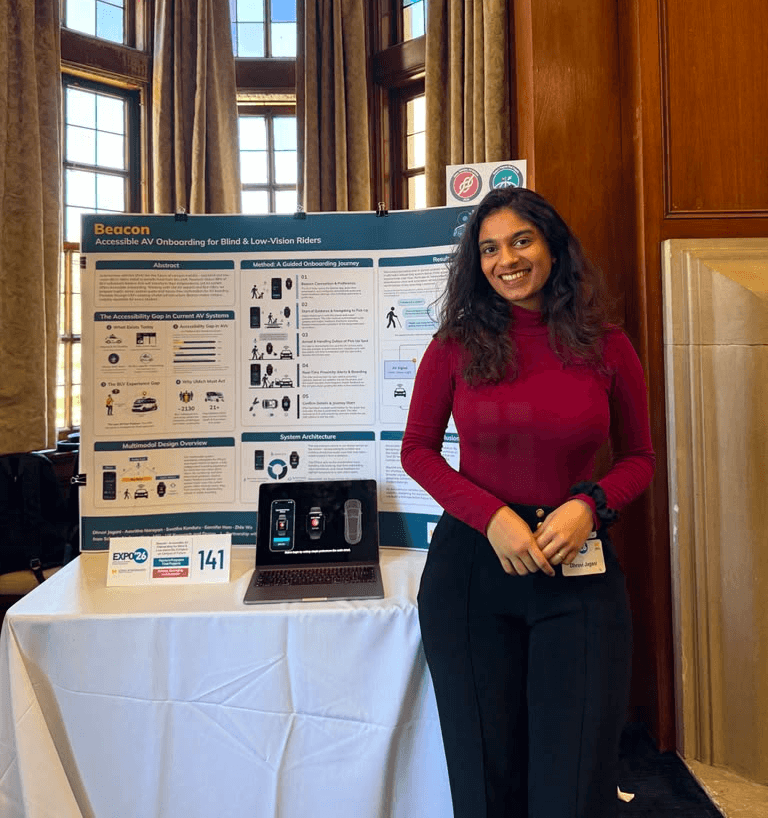
Accessible Autonomous Vehicle Onboarding System for Blind and Low-Vision Riders.
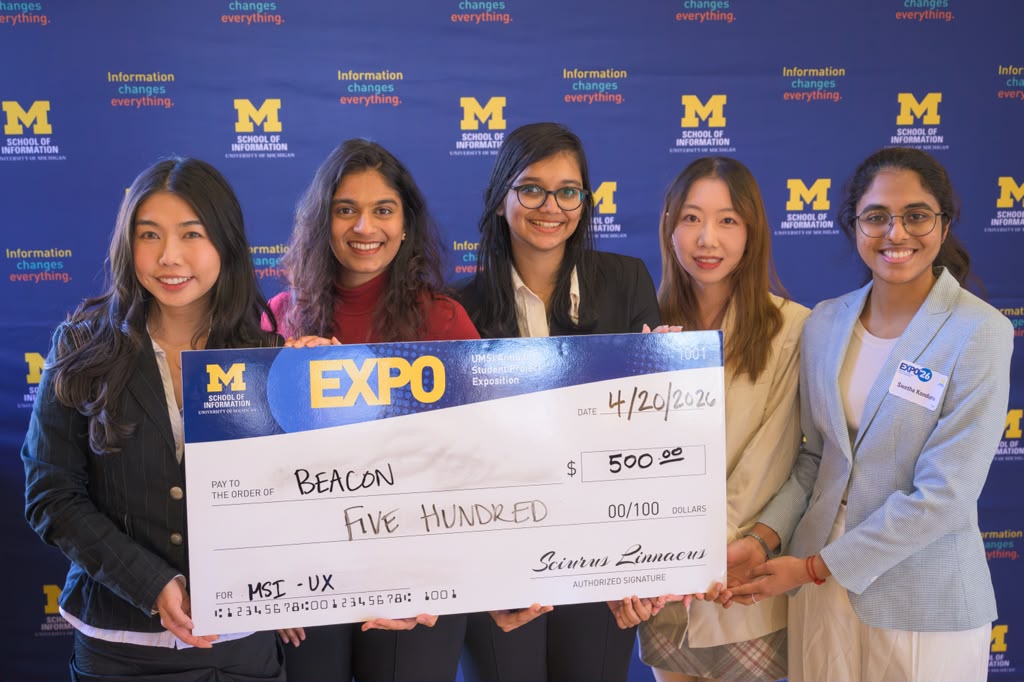
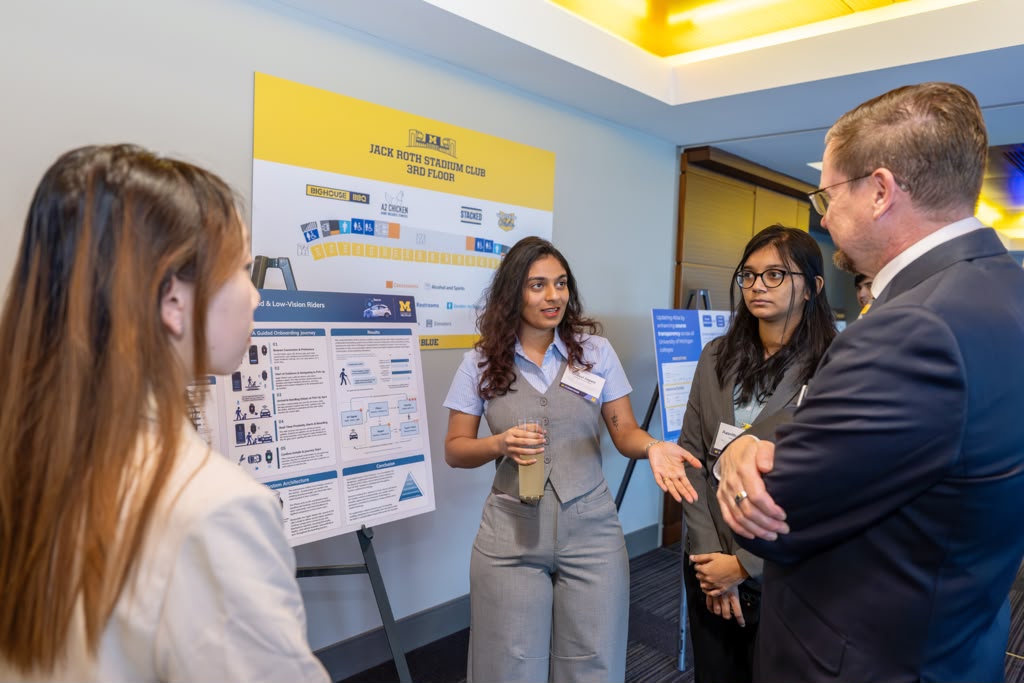
CCAT Paper Presentation Finalist · Campus of the Future semifinalist · Best UX Design & Research capstone (1 of 150 teams)
Accessible Autonomous Vehicle Onboarding System for Blind and Low-Vision Riders.
CCAT Paper Presentation Finalist · Campus of the Future semifinalist · Best UX Design & Research capstone (1 of 150 teams)
Role
Role
Inclusive UX Design • Conversational UX • User Research & Testing
Inclusive UX Design • Conversational UX • User Research & Testing
Timeline
Timeline
Winter 2026
(12 weeks)
Winter 2026
(12 weeks)
Winter 2026
(12 weeks)
team
team
Team of 5
Competitive analysis • Strategic research • Stakeholder alignment
Team of 5
Competitive analysis • Strategic research • Stakeholder alignment
Team of 5
Competitive analysis • Strategic research • Stakeholder alignment
tech stack
Tech Stack
Figma
Apple Watch UX
Claude
Figma
Apple Watch
Claude
Figma
Apple Watch UX
Claude
The last 50 feet is where the entire AV promise breaks down.
The last 50 feet is where the entire AV promise breaks down.
Overview
The last 50 feet is where the entire AV promise breaks down.
The last 50 feet is where the entire AV promise breaks down.
For blind and low-vision riders, autonomous vehicles should be the biggest mobility unlock in decades - 88% of blind people say AVs will change their independence. But the technology quits right before the part that matters.
Booking the ride works fine. Everything after that is the rider alone: find a specific car on a loud street with nobody to call, locate a door handle flush against a body panel you can't see, get in, and hand control to a machine.
For blind and low-vision riders, autonomous vehicles should be the biggest mobility unlock in decades - 88% of blind people say AVs will change their independence. But the technology quits right before the part that matters.
Booking the ride works fine. Everything after that is the rider alone: find a specific car on a loud street with nobody to call, locate a door handle flush against a body panel you can't see, get in, and hand control to a machine.
Problem
The industry solved the physical layer. Nobody solved perception.
The industry solved the physical layer. Nobody solved perception.
Ramps, wider doors and modified controls. But conversations with researchers at the University of Michigan Transportation Research Institute (UMTRI), mobility experts at University of Maine and an engineer at GM revealed a different gap.
Autonomous vehicles remove the human driver, the person who confirms "this is your ride" or helps a rider board safely. While the vehicle itself may be physically accessible, the onboarding experience isn't: locating the correct vehicle, finding the door, orienting themselves and boarding independently.
Which led me to the problem: How Might We help blind and low-vision riders confidently and independently use autonomous vehicles?
Ramps, wider doors and modified controls. But conversations with researchers at the University of Michigan Transportation Research Institute (UMTRI), mobility experts at University of Maine and an engineer at GM revealed a different gap.
Autonomous vehicles remove the human driver, the person who confirms "this is your ride" or helps a rider board safely. While the vehicle itself may be physically accessible, the onboarding experience isn't: locating the correct vehicle, finding the door, orienting themselves and boarding independently.
Which led me to the problem: How Might We help blind and low-vision riders confidently and independently use autonomous vehicles?
Research: exploring product direction
Letting the rider's constraints become the brief
Letting the rider's constraints become the brief
We built understanding from four directions as a team, and I wrote the artifacts that structured every one of those conversations - interview guides, discussion protocols, field simulation scripts, and the usability testing frameworks.
Looking at what already exists
Before designing anything, I needed to know what riders were actually being offered today. I audited Waymo, Zoox, Tesla, Beep, and May Mobility and the pattern was consistent across all of them.
We built understanding from four directions as a team, and I wrote the artifacts that structured every one of those conversations - interview guides, discussion protocols, field simulation scripts, and the usability testing frameworks.
Looking at what already exists
Before designing anything, I needed to know what riders were actually being offered today. I audited Waymo, Zoox, Tesla, Beep, and May Mobility and the pattern was consistent across all of them.
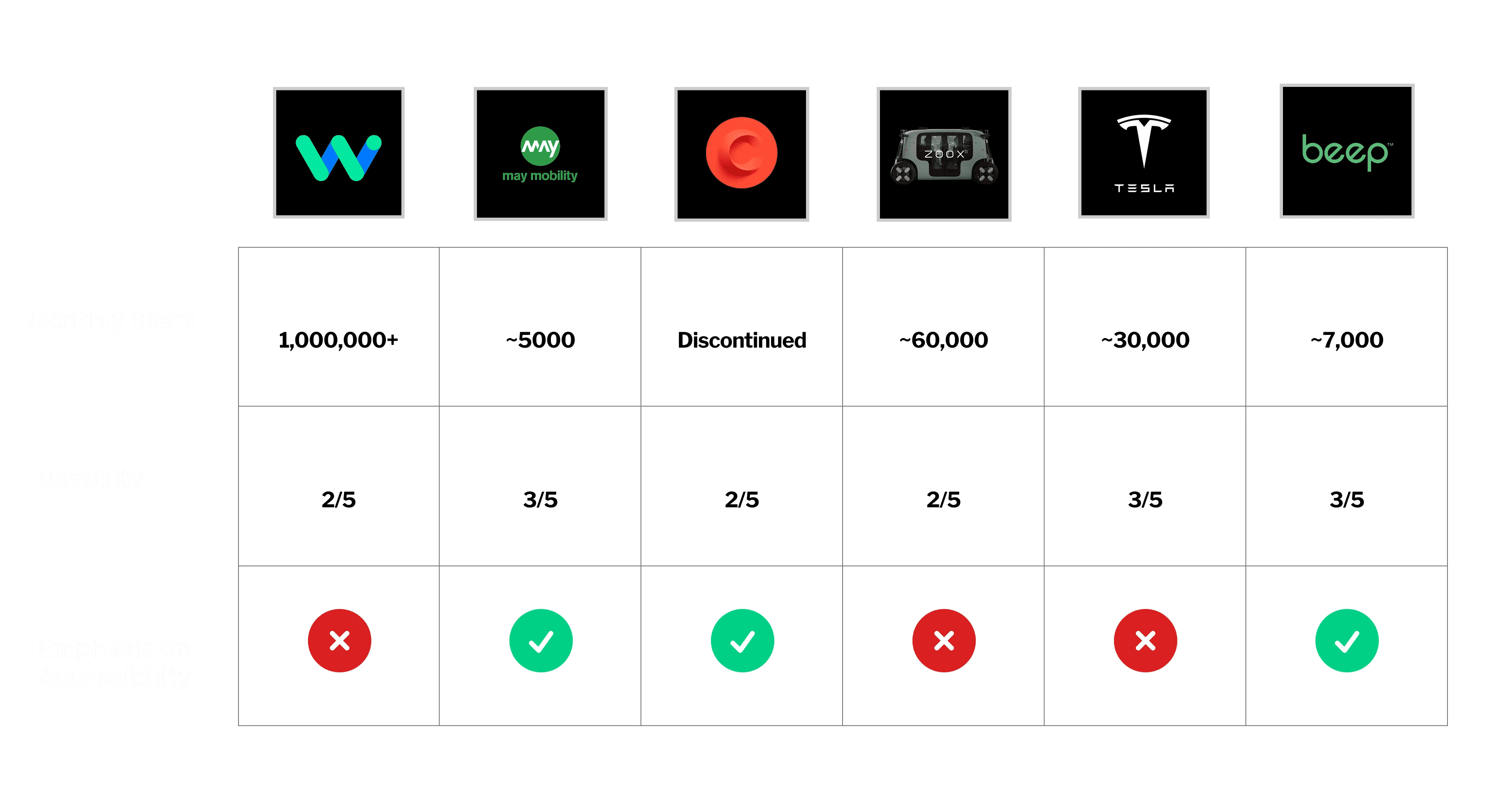
Every platform on this list handles the ride well. Not one of them handles getting into the car. Where support does exist like May Mobility's Ambassador program, it works by putting a human back in the loop, which solves the problem by reintroducing the exact dependency AVs were supposed to remove.
Every platform on this list handles the ride well. Not one of them handles getting into the car. Where support does exist like May Mobility's Ambassador program, it works by putting a human back in the loop, which solves the problem by reintroducing the exact dependency AVs were supposed to remove.
Talking to people
Talking to people
I interviewed researchers working across blindness, haptics and mobility, several of whom are from the BLV community themselves to pressure-test our thinking against what the industry is actually building. What we heard:
I interviewed researchers working across blindness, haptics and mobility, several of whom are from the BLV community themselves to pressure-test our thinking against what the industry is actually building. What we heard:
Dr. Paul Fink,
AV a11y researcher
"Autonomy means independence and not relying on people. It can be life changing. Learning is an important piece, and how to design things to help people learn."
"Autonomy means independence and not relying on people. It can be life changing. Learning is an important piece, and how to design things to help people learn."
"Autonomy means independence and not relying on people. It can be life changing. Learning is an important piece, and how to design things to help people learn."
Prof. Sile,
haptics & psychoacoustics
"Haptics are tricky. People have to be trained. The safer thing to do is speech and audio. More obvious and less intrusive is best."
"Haptics are tricky. People have to be trained. The safer thing to do is speech and audio. More obvious and less intrusive is best."
"Haptics are tricky. People have to be trained. The safer thing to do is speech and audio. More obvious and less intrusive is best."
Nicholas,
spatial cognition & BLV navigation
“Body-relative language like 'rear door on your left' is immediately actionable.”
“Body-relative language like 'rear door on your left' is immediately actionable.”
“Body-relative language like 'rear door on your left' is immediately actionable.”
Sam,
BLV rider & researcher
"If a vehicle doesn't pull up right in front of me, figuring out where that vehicle has arrived is a challenge." (Lost familiar cues like vehicle color; locating the correct AV becomes the biggest barrier.)
"If a vehicle doesn't pull up right in front of me, figuring out where that vehicle has arrived is a challenge." (Lost familiar cues like vehicle color; locating the correct AV becomes the biggest barrier.)
"If a vehicle doesn't pull up right in front of me, figuring out where that vehicle has arrived is a challenge." (Lost familiar cues like vehicle color; locating the correct AV becomes the biggest barrier.)
Andrea,
BLV rider & researcher
"I would use it in a heartbeat." (On wrist haptics, because as a guide dog user she only has one free hand.)
"I would use it in a heartbeat." (On wrist haptics, because as a guide dog user she only has one free hand.)
"I would use it in a heartbeat." (On wrist haptics, because as a guide dog user she only has one free hand.)
Three themes ran through our initial conversations:
Three themes ran through our initial conversations:
Hands are always full
Cane or dog in one, bag in the other, phone in the pocket.
Hands are always full
Cane or dog in one, bag in the other, phone in the pocket.
Hands are always full
Cane or dog in one, bag in the other, phone in the pocket.
Trust breaks before the ride
The anxiety sits entirely between the car arriving and the door closing.
Trust breaks before the ride
The anxiety sits entirely between the car arriving and the door closing.
Trust breaks before the ride
The anxiety sits entirely between the car arriving and the door closing.
The community isn't one user
Some want audio details, others find it noise. Flexibility was a must!
The community isn't one user
Some want audio details, others find it noise. Flexibility was a must!
The community isn't one user
Some want audio details, others find it noise. Flexibility was a must!

Riding it ourselves
Riding it ourselves
One of our teammates was in SF and ran a Waymo field test there riding Waymo as a simulated first-time BLV rider (blinfolded). I did the analysis later which showed:
One of our teammates was in SF and ran a Waymo field test there riding Waymo as a simulated first-time BLV rider (blinfolded). I did the analysis later which showed:
These findings, combined with three expert interviews and our user conversations, became the design principles behind every concept that followed.
These findings, combined with three expert interviews and our user conversations, became the design principles behind every concept that followed.

User Testing
Approach
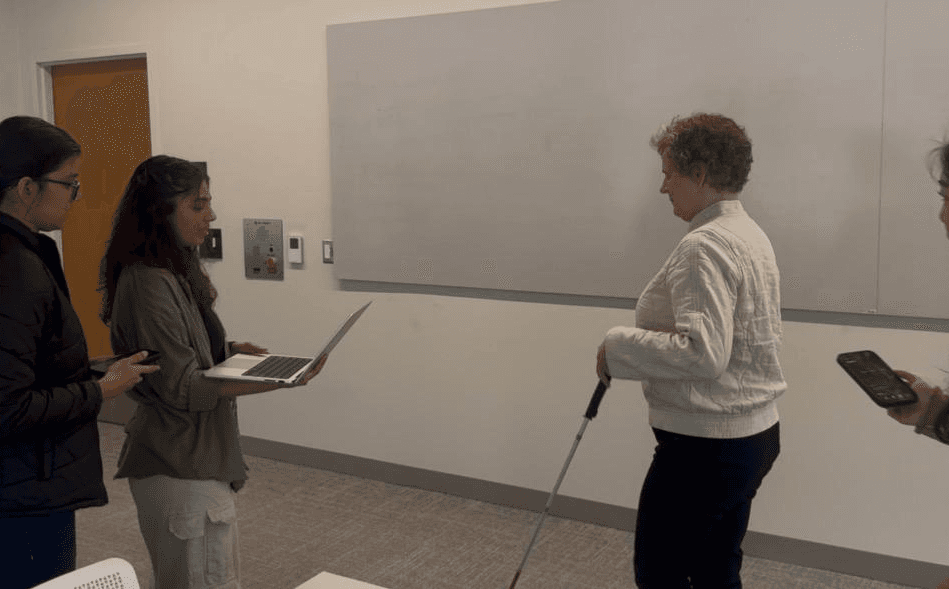
I evaluated solution using a Wizard of Oz prototype over five iterative rounds. Since WatchOS haptics weren't feasible within the project timeline, I manually triggered timer for vibrations, synced to the voice script.
Approach
I evaluated solution using a Wizard of Oz prototype over five iterative rounds. Since WatchOS haptics weren't feasible within the project timeline, I manually triggered timer for vibrations, synced to the voice script.
Participants
We tested with four blind and low vision riders. Participants represented diverse mobility preferences, including screen readers, assistive devices and guide dog users.
Participants
We tested with four blind and low vision riders. Participants represented diverse mobility preferences, including screen readers, assistive devices and guide dog users.
Design Decisions
Bringing ideas to life
A full multimodal prototype across phone, Apple Watch and in-vehicle with a complete conversational UX and haptic script system grounded in BLV spatial cognition research
A full multimodal prototype across phone, Apple Watch and in-vehicle with a complete conversational UX and haptic script system grounded in BLV spatial cognition research
Result and reflections

Confidence before vehicle moved
Completed without sighted assistance
Onboarding within 3-min target
92
85
100
89
0%
100%
Mobile-to-vehicle handshake success
Recognitions and BTS
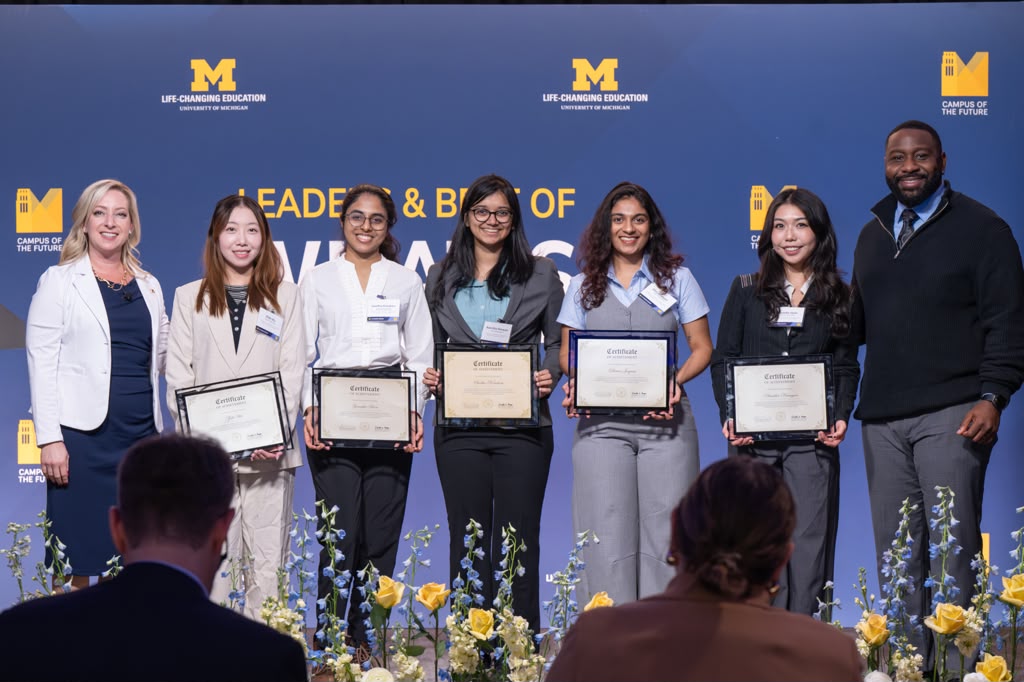
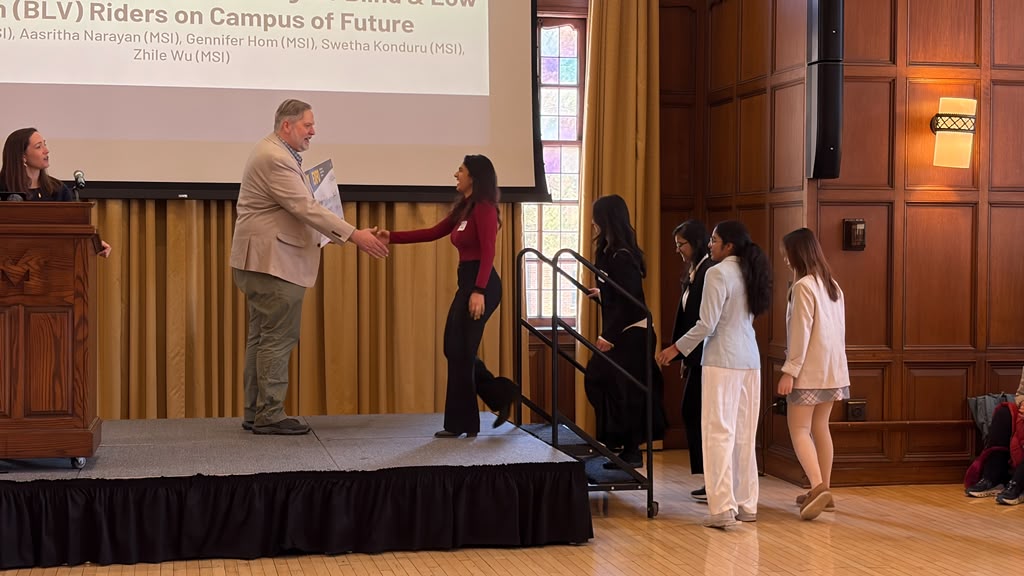
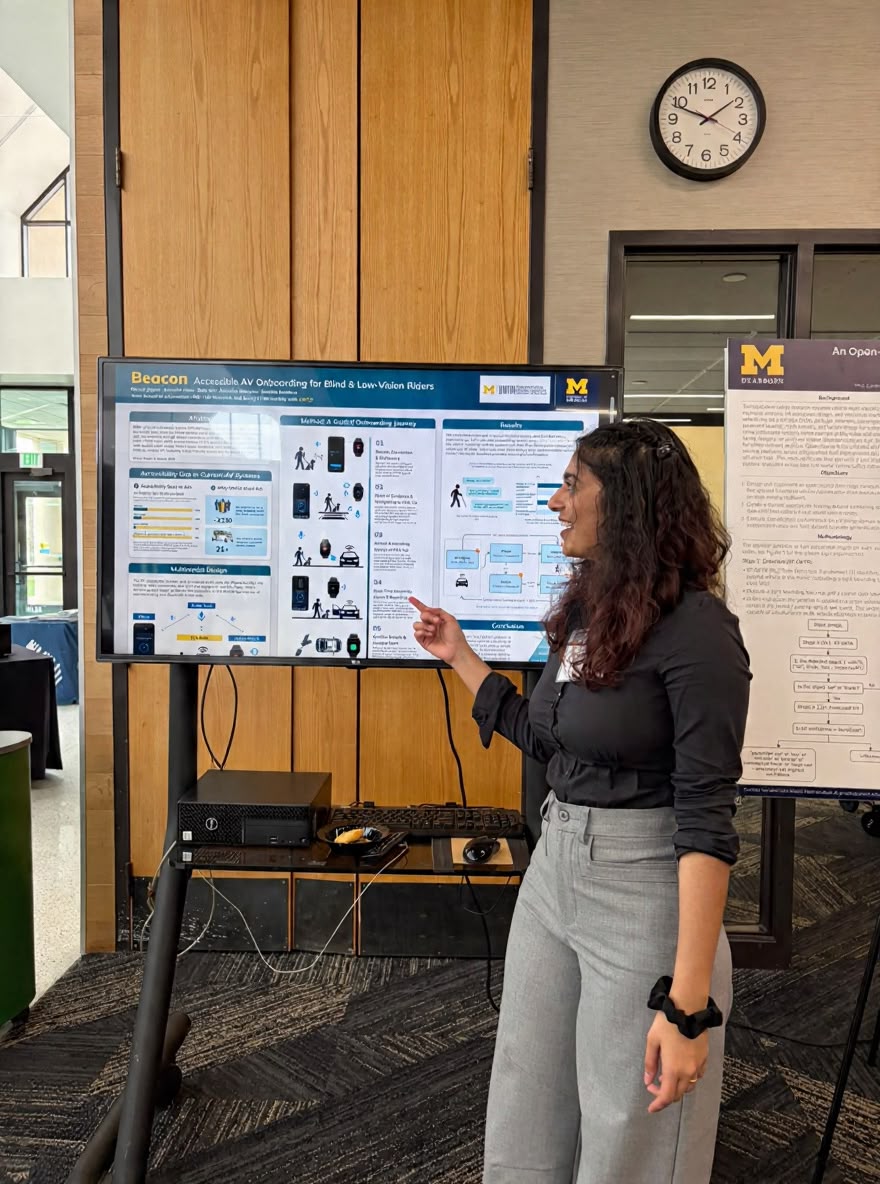
Designing for blind and low vision riders taught me that accessibility is less about adding features and more about reducing uncertainty. Every decision, from the wording of a prompt to the timing of a haptic cue, directly affected a rider's confidence.
The biggest lesson wasn't how to design for users I couldn't relate to, it was learning to stop relying on assumptions. Continuous testing and feedback from BLV riders transformed the product in ways intuition alone never could. It's a mindset I'll carry into every accessible and multimodal design I build.
Designing for blind and low vision riders taught me that accessibility is less about adding features and more about reducing uncertainty. Every decision, from the wording of a prompt to the timing of a haptic cue, directly affected a rider's confidence.
The biggest lesson wasn't how to design for users I couldn't relate to, it was learning to stop relying on assumptions. Continuous testing and feedback from BLV riders transformed the product in ways intuition alone never could. It's a mindset I'll carry into every accessible and multimodal design I build.


